In-cabin sensing
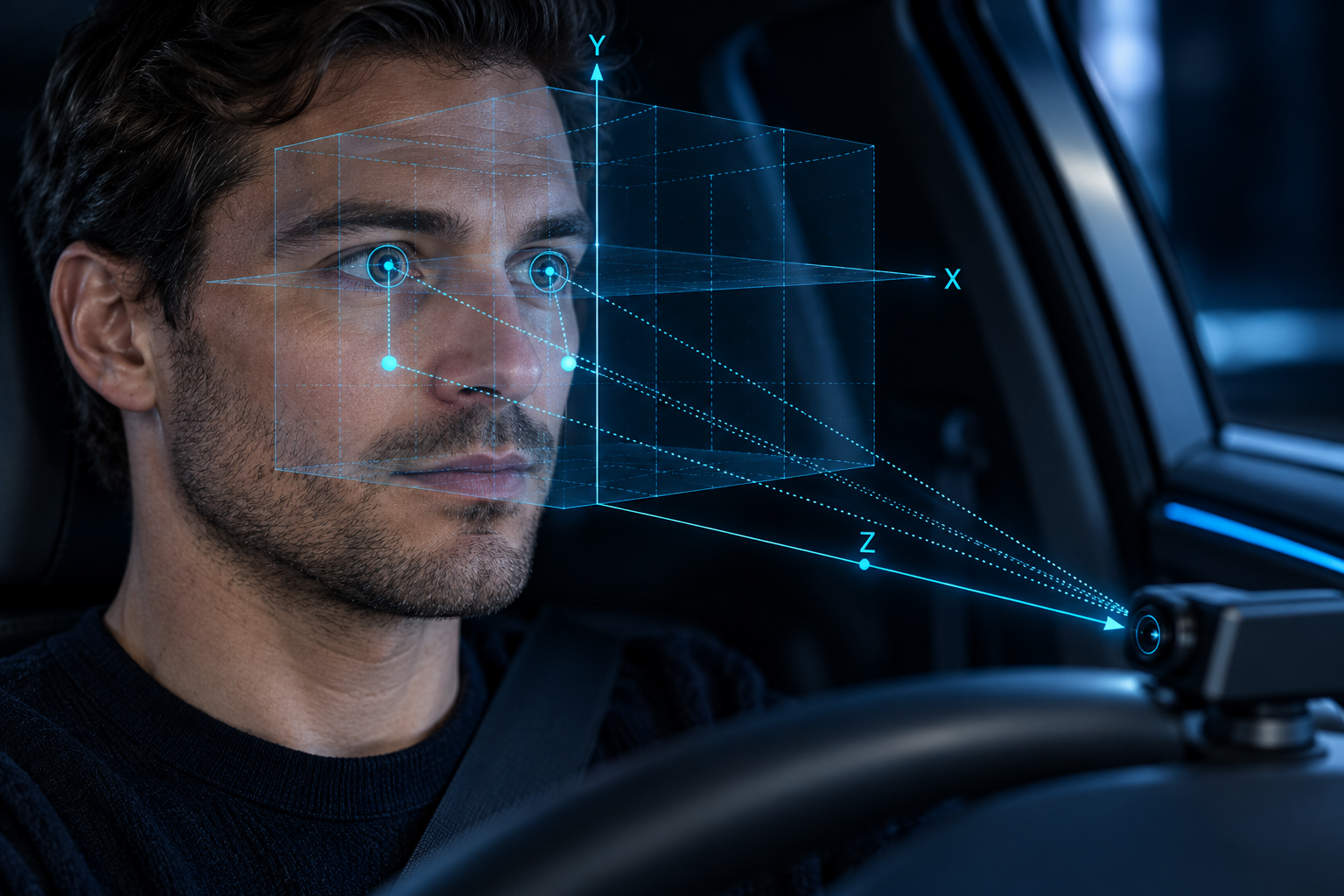
Camera and optics configured for the installation geometry and relevant lighting conditions.
Technologies / Precision Eye & Gaze
Connect where a driver looks with the cockpit controls and road objects that matter. Mindtronic AI brings gaze sensing, contextual interpretation and vehicle response together for more intuitive interaction.
01 / Why precision gaze
Knowing where someone looks is only the beginning. A useful vehicle experience also needs to identify a relevant target, apply the logic of the intended application and respond at the right time. The same gaze information can support cockpit interaction or attention-aware assistance through different application logic.
02 / In-cabin HMI & UX
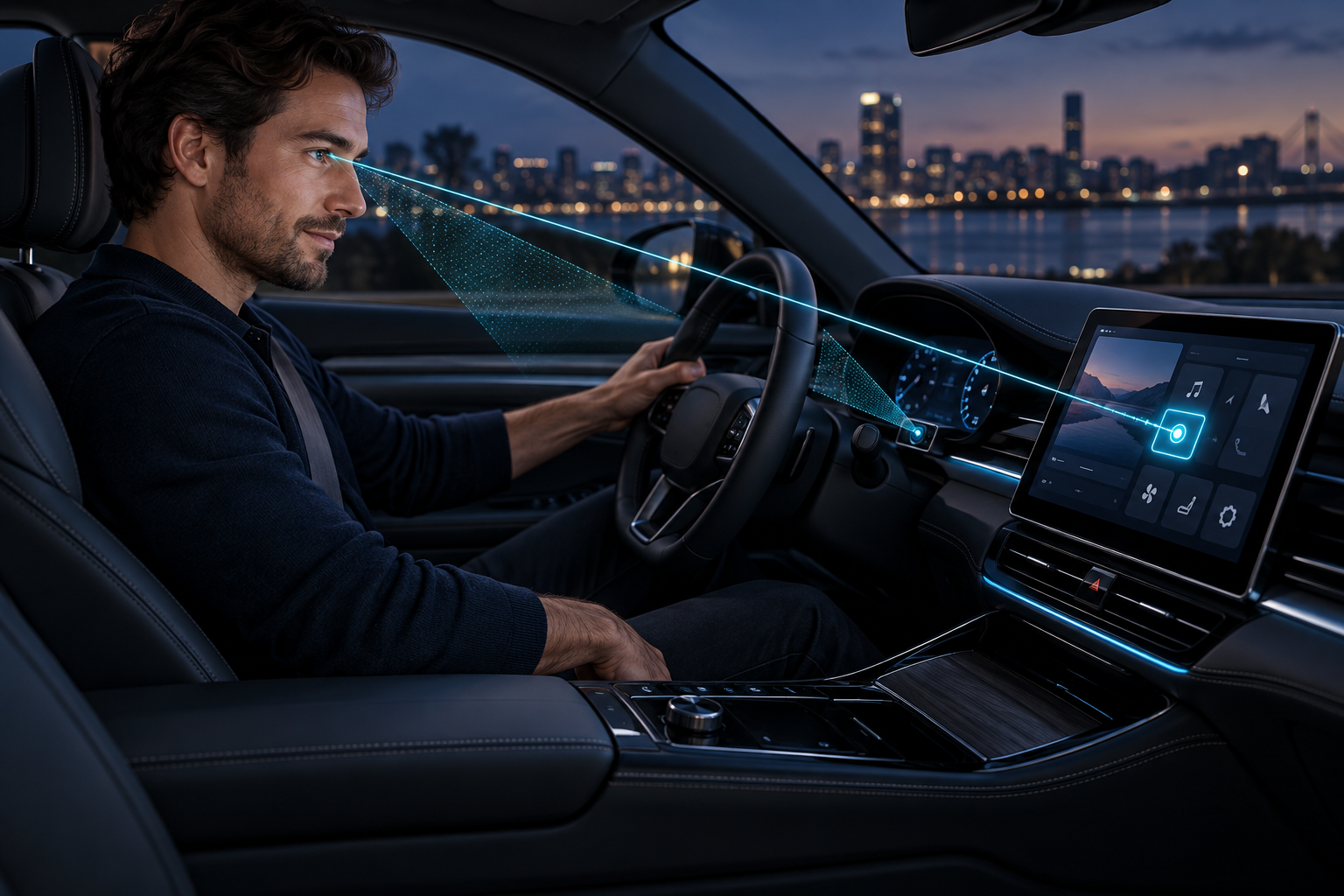
Gaze can make a dense cockpit interface feel closer to the driver's natural attention. The system can bring a likely control into focus, provide clear visual feedback and let the driver confirm the action.
Potential integrations include instrument clusters, center displays and other cockpit surfaces. Target selection can account for interface state and the driver's ongoing interaction, while the OEM defines the final confirmation and control behavior.
See the system approach →Gaze suggests a target; the example does not require a vehicle function to activate from a glance alone.
03 / Attention-aware ADAS & Copilot
Road-facing perception identifies relevant objects. Cabin gaze adds context about where the driver appears to be looking. Together, these signals can inform how an assistance or Copilot experience presents information.
For example, an OEM may evaluate whether attention context helps prioritize an object cue or adapt the presentation of assistance. Gaze direction does not establish that the driver saw or understood an object; system behavior and safety functions require program-specific validation.
Driver gaze and attention region
Detected objects and scene context
Integrated into OEM-defined ADAS and Copilot behavior
04 / Engineered as a complete interaction
Mindtronic AI's commercial starting point is a camera module and embedded gaze software. Vehicle-specific development connects sensing to calibration, target association, application logic and HMI or ADAS response.
Camera and optics configured for the installation geometry and relevant lighting conditions.
Embedded perception supplies gaze information for the target-association task.
Calibration and integration account for the driver and the vehicle installation.
Interface or scene context helps identify which target is relevant.
Feedback and application behavior are designed around timing and stability of the full system.
05 / OEM evaluation
Application results depend on cockpit layout, target size, user setup, head movement, lighting and the system's response time. An OEM evaluation should define the actual interaction and test it under representative conditions.
06 / Start an OEM evaluation
Discuss a cockpit UX evaluation, camera and software integration, or attention-aware assistance concept with Mindtronic AI. Program scope, performance targets and development toward SOP are defined with the OEM.