
Sensing & Perception
Co-design camera, optics, illumination, image processing, and perception around the intended function and operating conditions.
Automotive Engineering
From system architecture and embedded AI to vehicle integration, validation, and industrialization. We engineer complete vehicle functions against measurable requirements and real automotive constraints.
Discuss Your Vehicle Program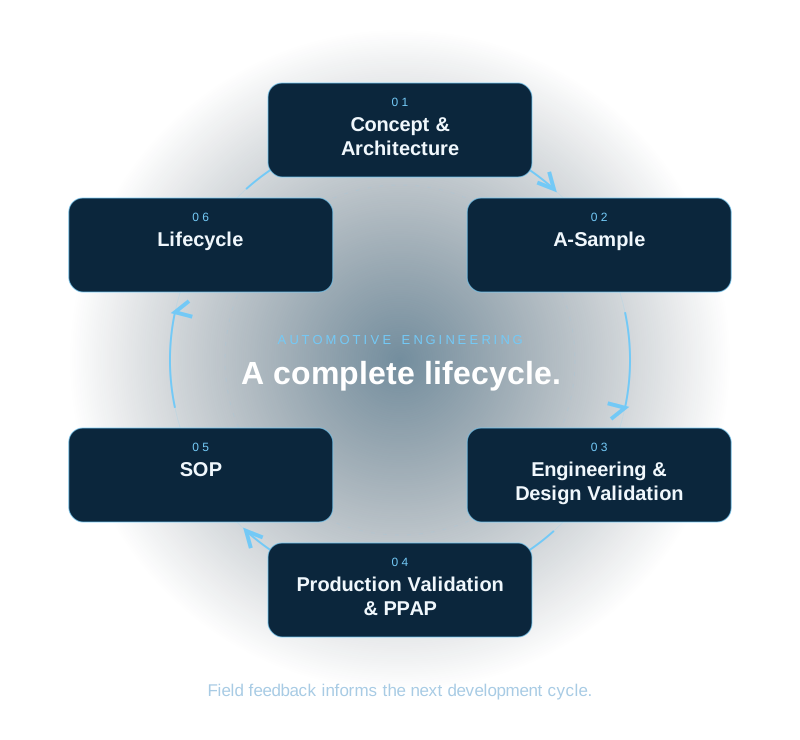
01 / System Architecture & Embedded AI
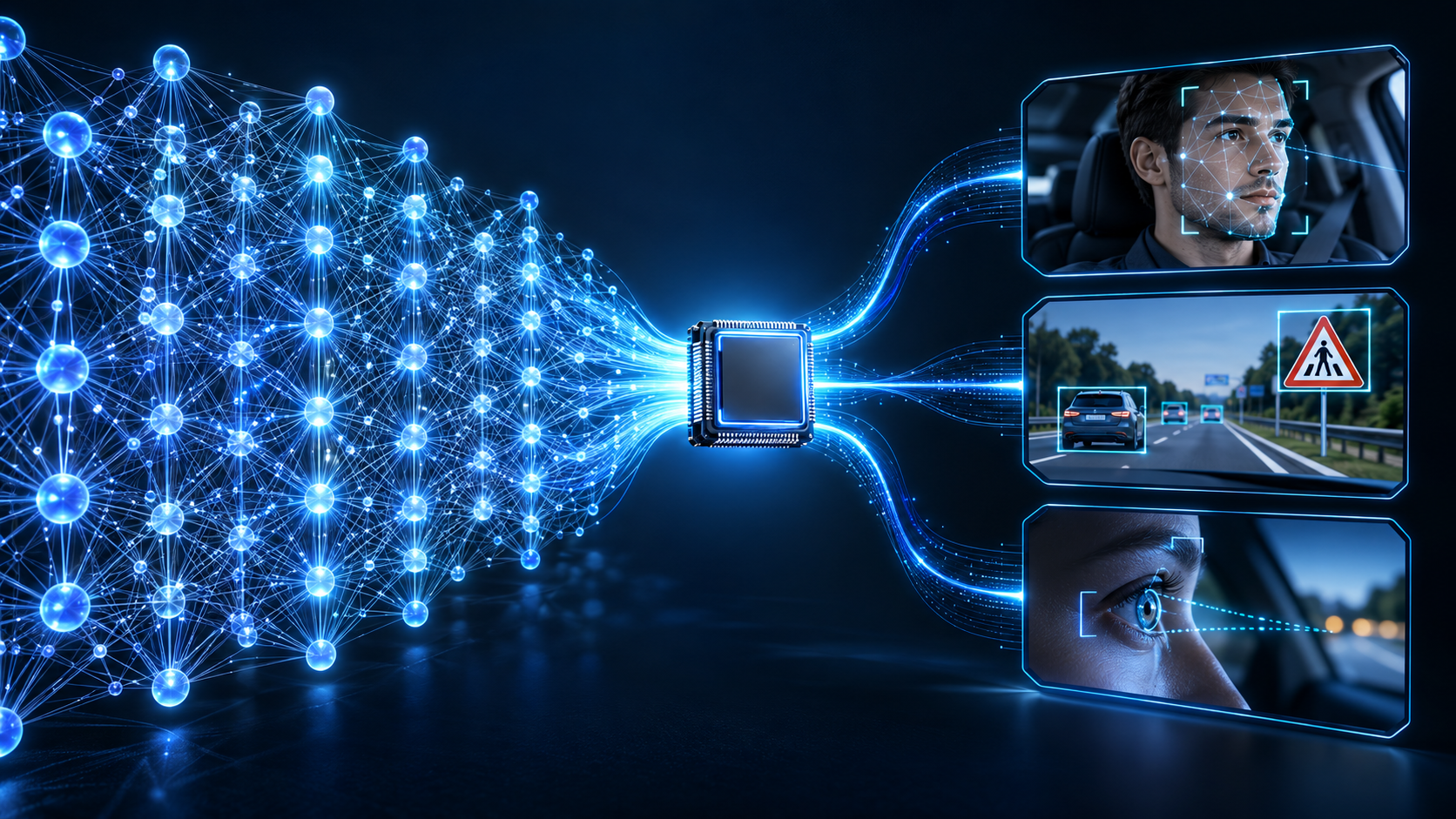
Performance emerges from the complete system: optics, sensing, perception, geometry, compute, power, thermal behavior, and latency.
Co-design camera, optics, illumination, image processing, and perception around the intended function and operating conditions.
Optimize models, processing pipelines, memory use, and scheduling against compute, power, thermal, and latency limits.
Allocate requirements across subsystems and evaluate how architecture affects performance, packaging, and production cost.
Applied in our products
Integrated driver monitoring and road perception on a constrained embedded platform. Explore HORUSEE →
DMS/OMS integration under mirror imaging, packaging, and thermal constraints. Explore IRVM →
Coordinated sensing, geometry, calibration, and latency for positioning performance. Explore pupil positioning →
02 / Development & Industrialization
Clear outputs at each stage connect engineering progress to customer program readiness.
Define the target vehicle function, use cases, operating conditions, interfaces, performance targets, and acceptance criteria. Assess feasibility and identify the main program risks.
Representative outputs: Requirements baseline and feasibility assessment.
Allocate requirements across sensing, hardware, software, processing, and vehicle interfaces. Establish performance budgets, integration assumptions, and the verification plan.
Representative outputs: System architecture and development plan.
Build initial integrated samples to demonstrate the core concept. Evaluate installation, interfaces, and functional behavior with the customer, and identify changes required for the next design stage.
Representative outputs: A-sample hardware/software and feasibility results.
Verify subsystem and integrated-system functions. Evaluate perception, processing, calibration, timing, and interface behavior, and resolve engineering issues against agreed requirements.
Representative outputs: Engineering validation results and issue-resolution records.
Evaluate the intended design under the agreed environmental, electrical, mechanical, and operating conditions. Confirm performance and design robustness against customer acceptance criteria.
Representative outputs: Design validation evidence and documented design maturity.
Evaluate units built through the intended production process. Verify assembly, programming, calibration where applicable, end-of-line testing, traceability, and product consistency.
Representative outputs: Production validation results and manufacturing-readiness evidence.
Prepare applicable customer-required PPAP documentation and production approval evidence. Coordinate product and process readiness with the contract manufacturer and customer.
Representative outputs: Applicable PPAP submission and customer approval records.
Release approved hardware, software, configurations, and production processes. Coordinate production launch and manage changes through the agreed approval process.
Representative outputs: Controlled production release and launch support.
Support diagnostics, issue analysis, maintenance, and approved changes. Feed relevant field findings into corrective actions and subsequent product development.
Representative outputs: Lifecycle support, change records, and feedback into the next development cycle.
Scope, responsibilities, and deliverables are agreed for each customer program—from software engagements to complete integrated products.
03 / Vehicle Integration
Integration addresses the interfaces, installation, service behavior, and user experience that turn a capable device into a vehicle function.
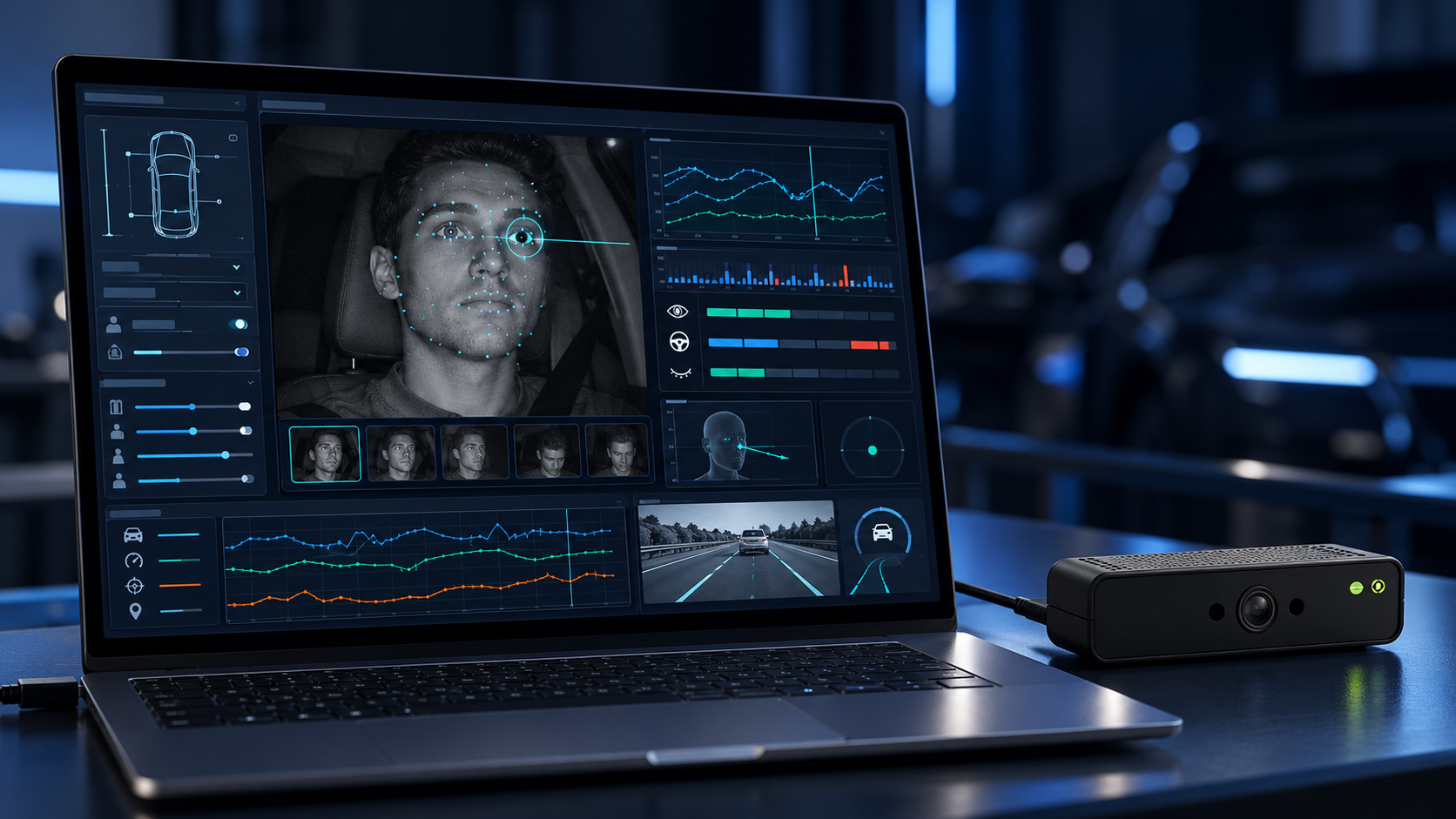
CAN communication, vehicle signals, ECU interfaces, and program-specific communication requirements.
UDS diagnostics, service functions, software-update interfaces, and configuration.
Mounting, harnesses, connectors, optical placement, enclosure, and installation constraints.
Warning behavior, display outputs, interaction logic, and coordination with vehicle systems.
04 / Validation & System Performance
A perception output alone does not establish delivered performance. We connect requirements, error sources, operating conditions, and acceptance evidence.
Establish performance requirements and the operating conditions under which they apply.
Account for sensing, algorithms, calibration, processing, and dynamic behavior.
Evaluate relevant users, environments, installations, and operating scenarios.
Provide traceable results, identified limitations, and evidence for program decisions.
| Function | Validation considerations |
|---|---|
| Driver Monitoring | Detection performance, false warnings, user variation, lighting, occlusion, and vehicle installation. |
| 3D Pupil Positioning | Positioning error, calibration, operating range, end-to-end latency, and dynamic motion. |
05 / Automotive Safety & Compliance
Regulatory, safety, cybersecurity, and software-update requirements influence the architecture, verification plan, and delivery evidence.
DDAW, ADDW, and ISA requirements, associated validation, and support for vehicle homologation.
Applicable customer safety requirements, function behavior, fault handling, and required engineering evidence.
Program requirements for access, software integrity, controlled updates, and lifecycle changes.
06 / Production & Lifecycle
Mindtronic AI manages product engineering, manufacturing coordination, quality requirements, and lifecycle changes, with production executed through qualified contract manufacturers.
Production test, programming, calibration where applicable, and release criteria.
Agreed quality controls, production records, unit traceability, and applicable PPAP documentation.
Hardware/software versions, approved changes, and coordinated production releases.
Diagnostics, issue analysis, software maintenance, and customer-program support.
Start a project
Share your target function, installation conditions, interfaces, performance requirements, and development schedule. Together, we can define the architecture, integration scope, and validation plan for your program.
Discuss Your Engineering Requirements →